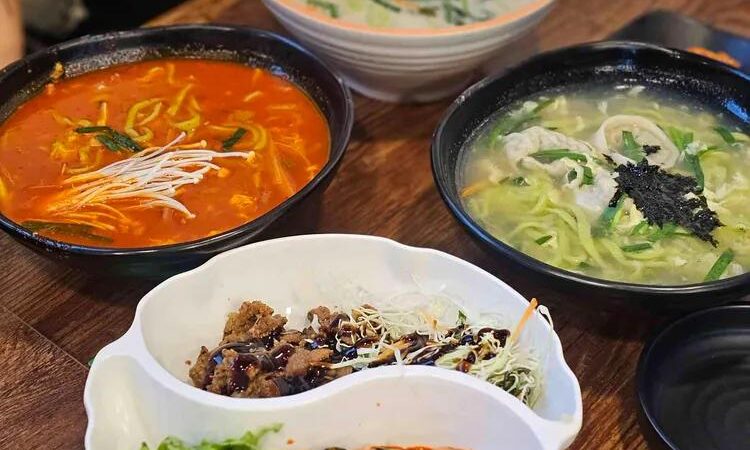
Korean noodles are one of the most loved parts of Korean cuisine, offering a variety of traditional dishes with unique flavors, textures, and cooking styles. From comforting noodle soups to refreshing cold noodles, Korean noodle dishes showcase the rich culture and history of Korean food.
Korean cuisine includes many traditional foods, such as Kimchi, a famous fermented food that represents Korea’s food culture.
Whether you are visiting Korea, dining at a Korean restaurant in Australia, or cooking at home, Korean noodles offer a wide variety of flavours, textures, and traditions.
This guide introduces some of the most popular Korean noodle dishes and explains what makes each one unique.
What Makes Korean Noodles Special?
Unlike many other cuisines, Korean noodles are made using a wide variety of ingredients.
Depending on the dish, noodles may be made from:
- Wheat flour
- Buckwheat
- Sweet potato starch
- Rice flour
- Wheat and potato starch blends
Each type creates a different texture, from chewy glass noodles to smooth buckwheat noodles.
Korean noodles are also enjoyed in many ways, including:
- Hot noodle soups
- Cold noodle dishes
- Stir-fried noodles
- Spicy mixed noodles
- Rich black bean sauce noodles
10 Popular Korean Noodles You Must Try
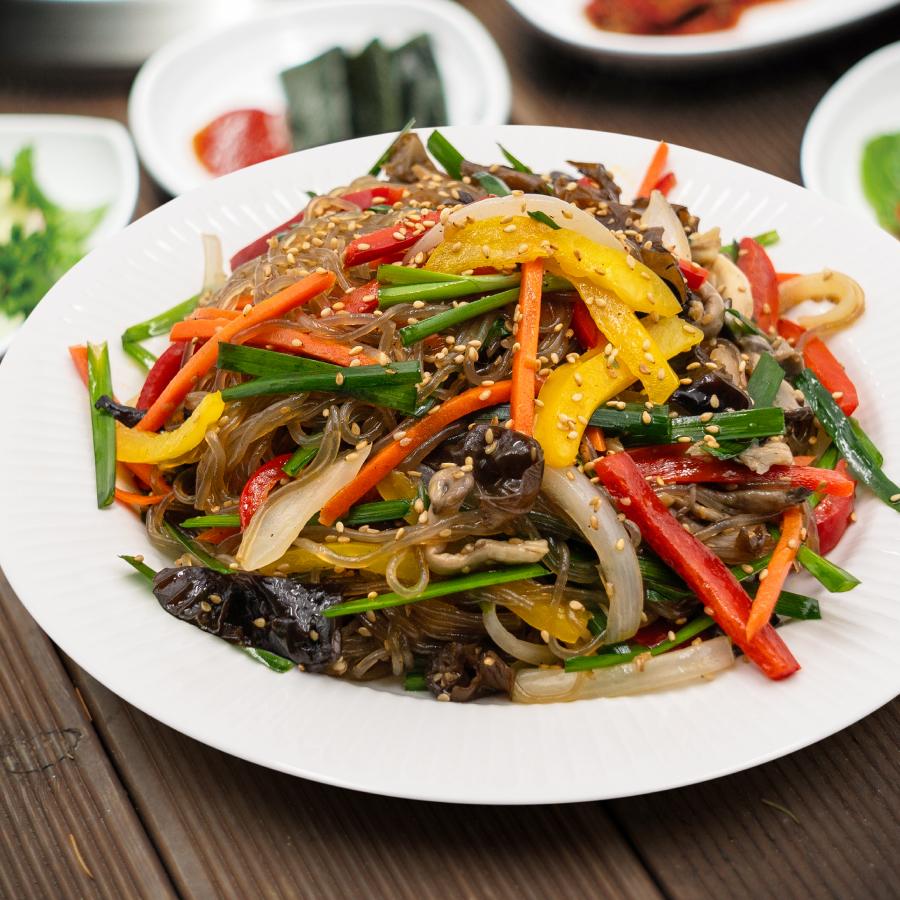
1. Japchae (잡채) Korean Glass Noodles
Japchae is a famous Korean dish made with chewy sweet potato glass noodles stir-fried with vegetables, mushrooms, beef, soy sauce, and sesame oil. Although many people consider it a noodle dish, Japchae is often served as a special side dish during Korean celebrations, holidays, and family gatherings.
The combination of soft noodles, colorful vegetables, and savory flavors makes Japchae one of the most loved Korean dishes around the world.
You can also learn more about this delicious dish in our Korean Japchae guide.
Why You Should Try It
- Chewy glass noodles
- Colorful vegetables
- Great for celebrations
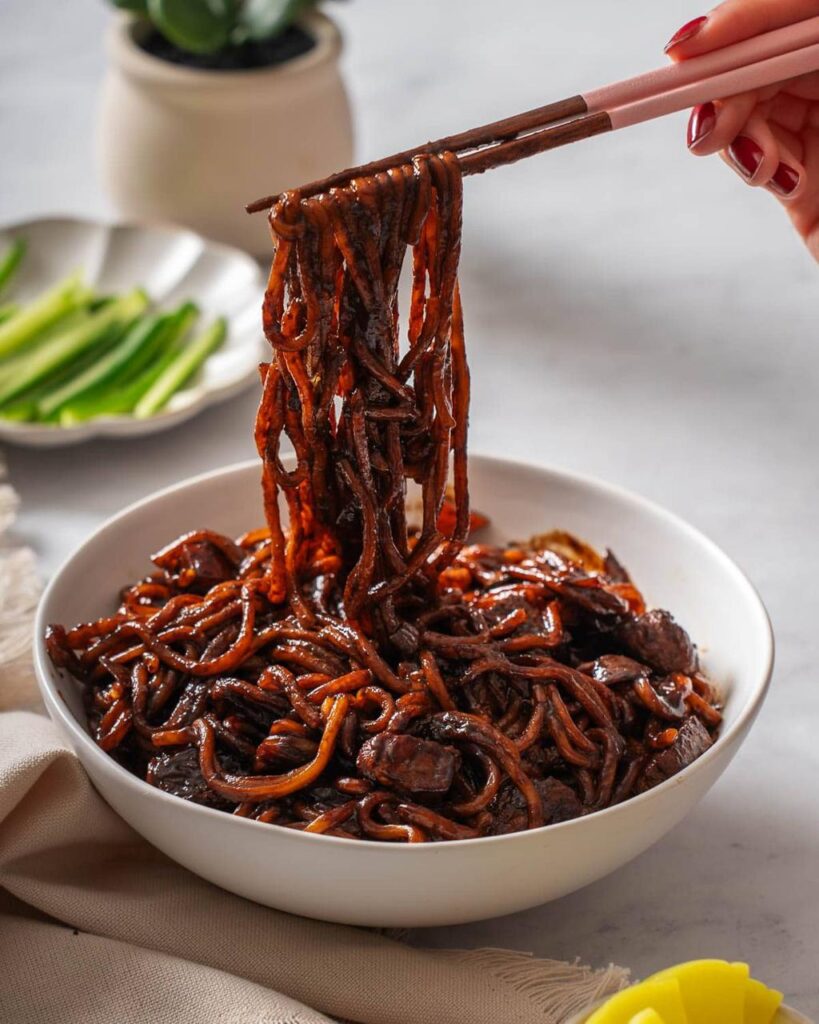
2. Jajangmyeon (짜장면)
Jajangmyeon is one of Korea’s most popular comfort foods. If you enjoy Korean noodles, you may also want to discover Jajangmyeon, one of Korea’s most popular black bean noodle dishes.
It features thick wheat noodles topped with a rich black bean sauce made from fermented soybean paste, onions, pork, and vegetables.
It is especially popular on special occasions and takeaway nights.
Why You Should Try It
- Rich and savory flavor
- Thick, chewy noodles
- Popular Korean comfort food
3. Kalguksu – Korean Knife-Cut Noodle Soup
Kalguksu is a traditional Korean noodle soup made with handmade knife-cut noodles served in a warm and flavorful broth. The noodles have a soft and chewy texture, and the soup is often prepared with seafood, chicken, or vegetables.
This comforting Korean noodle dish is especially popular during colder seasons because of its warm broth and satisfying taste. Many Korean families enjoy Kalguksu as a homemade meal that brings comfort and tradition together.
If you enjoy Korean noodles, Kalguksu is a great dish to experience the simple yet rich flavors of Korean cuisine.
Why You Should Try It
- Warm and comforting
- Soft, handmade noodles
- Great for cold days
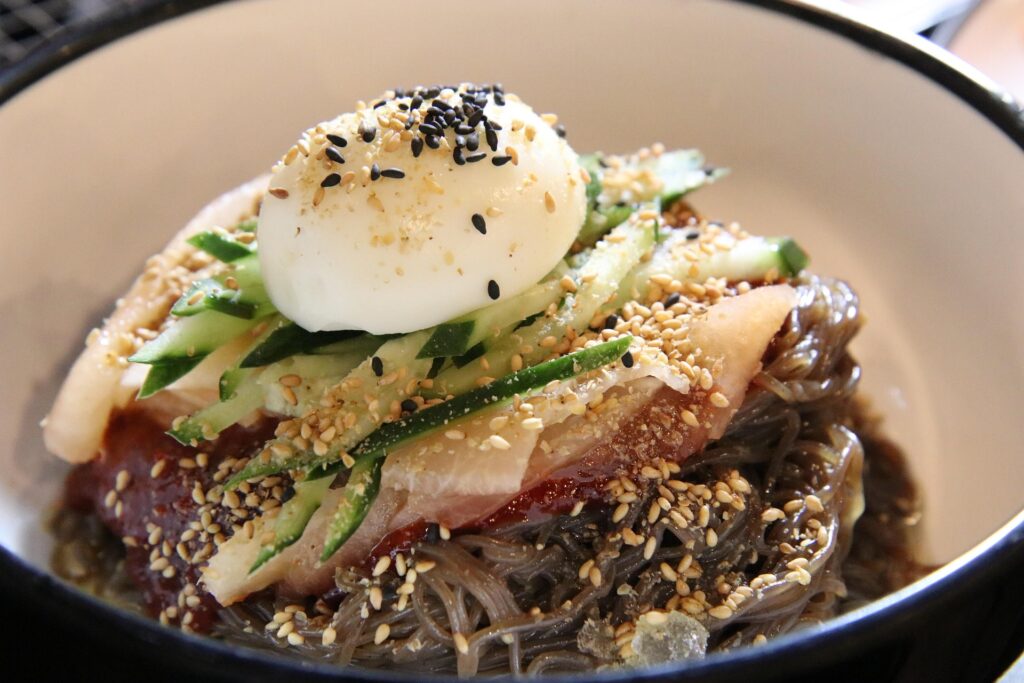
4. Naengmyeon (냉면) – Korean Cold Noodles
Naengmyeon is one of Korea’s most famous cold noodle dishes. It features thin, chewy noodles made from ingredients such as buckwheat or potato starch.
There are two popular types: Mul Naengmyeon, served in a refreshing cold broth, and Bibim Naengmyeon, mixed with a spicy sauce.
Naengmyeon is especially popular during warm weather because of its refreshing taste and unique chewy texture.
Why You Should Try It
- Cool and refreshing
- Chewy noodle texture
- Perfect for summer
5. Ramyeon (라면)
Korean Ramyeon is famous around the world for its bold flavours.
Popular brands include spicy, seafood, beef, kimchi, and cheese varieties.
Many people also customise Ramyeon by adding eggs, vegetables, seafood, or sliced meat.
Why You Should Try It
- Bold and flavorful
- Easy to customize
- Popular Korean comfort food
6. Jjamppong (짬뽕)
Jjamppong is a spicy noodle soup filled with seafood and vegetables.
The rich red broth is flavoured with Korean chili powder and is especially popular among people who enjoy spicy food.
Why You Should Try It
- Spicy and warming
- Seafood and vegetable ingredients
- Great for spicy food lovers
7. Bibim Guksu (비빔국수) – Spicy Mixed Noodles
Bibim Guksu is a popular Korean noodle dish made with thin wheat noodles mixed with a spicy, sweet, and tangy sauce.
The sauce is usually made with gochujang, vinegar, sugar, garlic, and sesame oil. Fresh vegetables such as cucumber and green onions are often added for extra freshness and crunch.
Bibim Guksu is especially popular during warm weather because it is refreshing, flavorful, and easy to prepare.
Why You Should Try It
- Spicy and refreshing
- Light and flavorful
- Perfect for summer
8. Sujebi (수제비) – Hand-Torn Noodle Soup
Sujebi is a traditional Korean soup made with small pieces of hand-torn wheat dough cooked in a savory broth.
The soft and chewy pieces of dough are usually served with vegetables, potatoes, seafood, or other ingredients.
Sujebi is a comforting Korean home-style dish, especially popular on cold or rainy days.
Why You Should Try It
- Soft and chewy texture
- Warm and comforting
- Traditional Korean home cooking
9. Kongguksu (콩국수) – Cold Soybean Noodles
Kongguksu is a refreshing Korean summer noodle dish served in a cold soybean broth.
The creamy broth has a mild and nutty flavor and is usually served with thin wheat noodles. Cucumber and sesame seeds may be added as simple toppings.
Kongguksu is a great choice for people who prefer a mild and refreshing Korean noodle dish.
Why You Should Try It
- Cool and refreshing
- Mild and nutty flavor
- Popular Korean summer dish
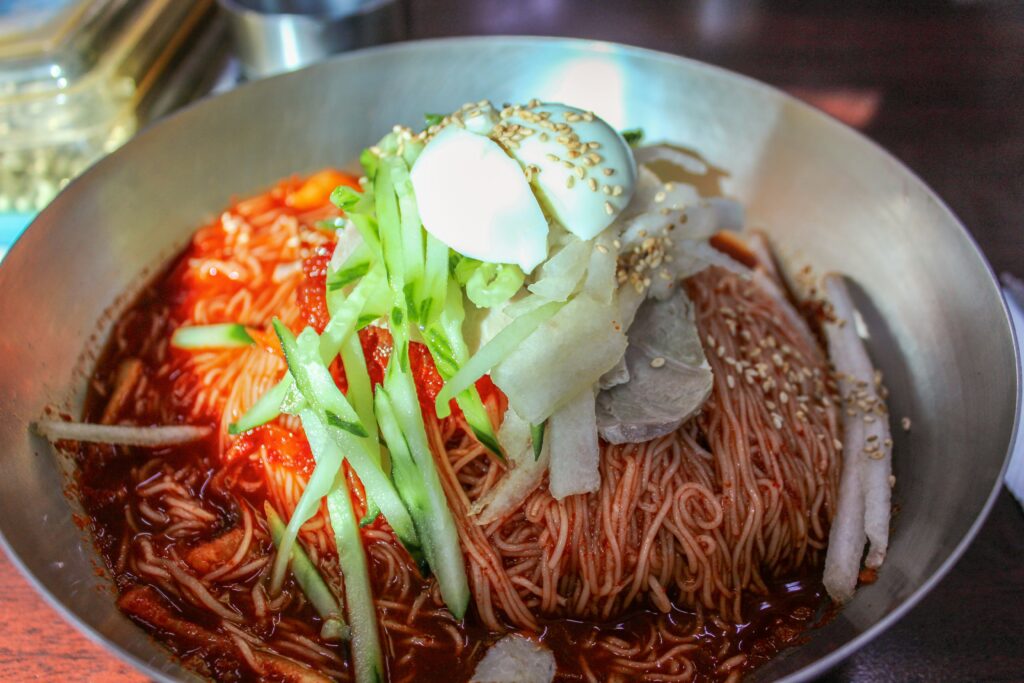
10. Bibim Naengmyeon (비빔냉면) – Spicy Cold Noodles
Bibim Naengmyeon is a popular Korean cold noodle dish made with chewy noodles and a spicy, sweet, and tangy chili sauce.
It is commonly topped with cucumber, boiled egg, and Korean pear. The combination of spicy sauce and refreshing toppings makes it a popular summer dish.
Bibim Naengmyeon is especially loved by people who enjoy bold and spicy flavors.
Why You Should Try It
- Spicy and refreshing
- Chewy noodle texture
- Perfect for warm weather
Korean Noodles as Part of a Balanced Meal
Korean noodles can be enjoyed as part of a balanced meal when served with vegetables, seafood, meat, and flavorful traditional ingredients. Many Korean noodle dishes provide a satisfying combination of taste, texture, and nutrition.
Korean Noodles and Korean Culture
Noodles have long been part of Korean food culture.
In Korea, long noodles traditionally symbolise long life and good fortune. Because of this, noodle dishes are often served during birthdays, celebrations, and family gatherings.
Each region of Korea has also developed its own noodle specialties using local ingredients and cooking traditions. VISITKOREA
Why Korean Noodles Are Popular in Australia
Korean noodles have become increasingly popular across Australia.
Many Australians enjoy Korean noodle dishes because they offer:
- Rich and comforting flavours
- Healthy vegetable ingredients
- A variety of spicy and mild options
- Traditional Korean cooking methods
- Unique textures not commonly found in Western cuisine
Korean restaurants throughout Australia now serve a wide selection of traditional noodle dishes.
Frequently Asked Questions
Are Korean noodles spicy?
Not always.
Some dishes such as Jjamppong and Bibim Naengmyeon are spicy, while Kalguksu and Japchae are generally mild.
What are Korean glass noodles made from?
Korean glass noodles (Dangmyeon) are made from sweet potato starch, giving them their famous chewy texture.
Which Korean noodle dish should beginners try?
Japchae, Kalguksu, and Jajangmyeon are excellent choices for people trying Korean noodles for the first time.
Final Thoughts
Korean noodles are a wonderful way to discover Korean food culture. From comforting noodle soups to refreshing cold noodles, each dish offers unique flavors and traditions. As Korean cuisine continues to grow in popularity in Australia, more people are enjoying the taste and diversity of Korean noodles. For more information about Korean noodles and Korean food culture, visit the official VISITKOREA guide, Korea’s Favorite Noodles.
If you want to explore more Korean food, discover our guides to other popular dishes including Kimchi, Japchae, and Korean BBQ. These dishes are loved worldwide and represent the diversity of Korean cuisine.
Related Articles