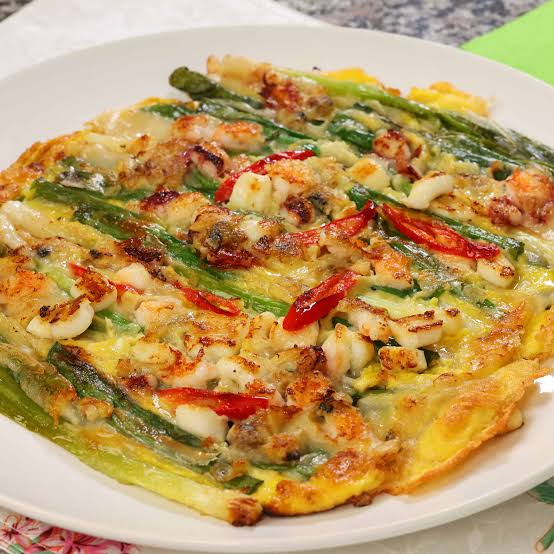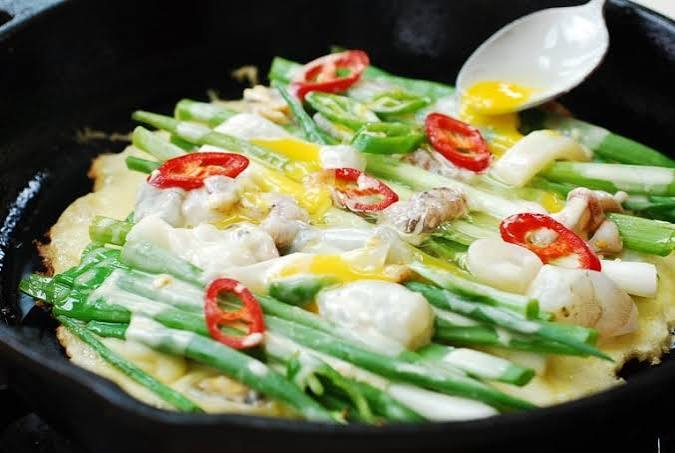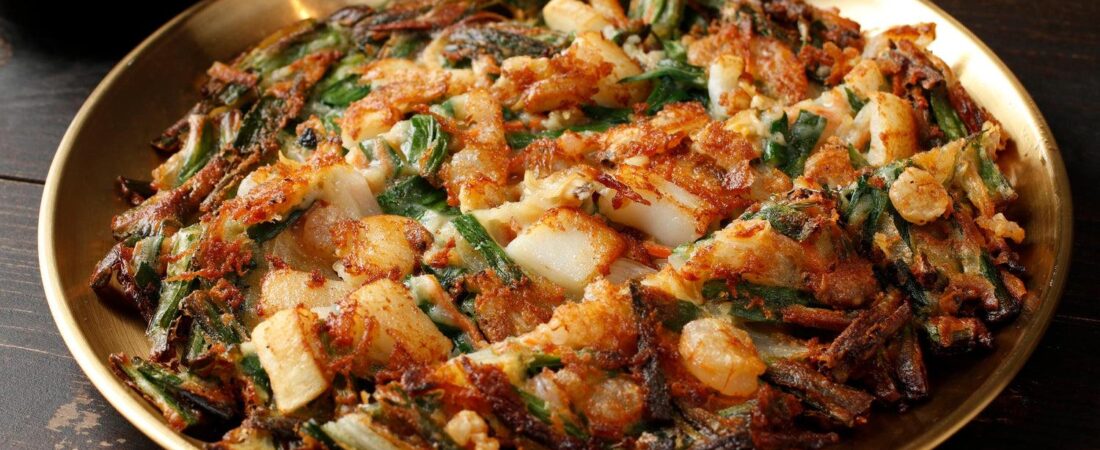
Haemul Pajeon is a popular Korean savoury pancake made with fresh seafood and green onions. Crispy around the edges and soft in the centre, this traditional Korean dish is loved for its simple ingredients, rich flavour, and satisfying texture.
Often described as a Korean seafood pancake, this dish is commonly shared with family and friends at restaurants, markets, and home meals. It is also a popular choice for people discovering Korean cuisine for the first time.
From its connection with rainy-day food culture to its delicious combination of seafood and green onions, this savoury pancake offers a tasty introduction to Korean food traditions.
What Is Haemul Pajeon?
Haemul Pajeon is a Korean savoury pancake prepared with green onions, seafood, and a light batter.
The name explains the main ingredients:
- Haemul (해물) means seafood.
- Pa (파) means green onion.
- Jeon (전) refers to a Korean-style savoury pancake.
Depending on the recipe, the pancake may contain squid, prawns, mussels, clams, or other seafood.
A typical batter is made with flour and water, while egg may be added to provide extra richness and help create a golden surface.
The result is a pancake with crispy edges, tender green onions, and pieces of seafood throughout.
What Is in This Korean Seafood Pancake?
The ingredients can vary between restaurants and families, but common ingredients include:
- Green onions
- Squid
- Prawns or shrimp
- Mussels
- Clams
- Eggs
- Flour
- Water
- Salt
- Cooking oil
Some recipes also include vegetables such as carrots, chilli, or capsicum.
The seafood provides a rich savoury flavour, while green onions add freshness and aroma.
How Is It Cooked?
One of the secrets to a good Korean seafood pancake is the cooking temperature.
The green onions and seafood are arranged in a hot frying pan before the batter is added. The pancake is then cooked until the bottom becomes golden and crisp.
It is carefully turned and cooked on the other side.
A good result should have:
- Crisp golden edges
- A lightly crunchy surface
- Tender seafood
- Soft green onions
- A moist but cooked centre
Cooking the pancake in a well-heated pan also helps prevent the batter from becoming too soft or greasy.
Why Is It So Popular?
This dish is popular because it combines familiar ingredients with traditional Korean flavours.
It is:
- Crispy and satisfying
- Rich in seafood flavour
- Easy to share
- Suitable as a starter or side dish
- Enjoyable with other Korean foods
- Delicious when served hot
Its large pancake shape also makes it ideal for sharing at the table.
Instead of everyone ordering a separate serving, friends and family can place one pancake in the centre and enjoy it together.
Korean Rainy-Day Food Culture
Pajeon is famously associated with rainy days in Korea.
Many Koreans enjoy savoury pancakes when the weather is wet and cool. The sound of batter sizzling in a hot pan is often associated with the comforting atmosphere of a rainy day.
This connection has become an enjoyable part of Korean food culture.
Although there is no requirement to eat the dish only when it rains, it has become strongly connected with this cosy food tradition.
What Sauce Is Served With It?
The pancake is commonly served with a simple dipping sauce.
A typical sauce may contain:
- Soy sauce
- Vinegar
- Sesame oil
- Green onion
- Sesame seeds
- Chilli, depending on preference
The salty and slightly tangy sauce provides a refreshing contrast to the crispy pancake.
The amount of sauce can be adjusted according to personal taste.
What Do Koreans Eat With It?
This savoury pancake can be enjoyed as part of a larger Korean meal.
Popular accompaniments include:
- Kimchi
- Banchan
- Steamed rice
- Korean soups
- Korean BBQ
- Soy-based dipping sauce
It is also traditionally associated with makgeolli, a Korean rice wine.
For more information about Korean culture and traditional food experiences, the Korean Cultural Centre Australia provides resources about Korean culture and events in Australia.
Different Types of Jeon
Haemul Pajeon belongs to a wider family of Korean dishes called jeon.
Jeon are savoury foods made by coating or combining ingredients with batter and cooking them in a pan.
Popular examples include:
Kimchi Jeon
Kimchi Jeon uses chopped kimchi to create a savoury pancake with a distinctive fermented and slightly spicy flavour.
Vegetable Jeon
Vegetable versions can contain ingredients such as zucchini, onion, mushrooms, or other seasonal vegetables.
Meat Jeon
Some varieties are prepared with minced or thinly sliced meat.
Pajeon
Pajeon focuses primarily on green onions and can be prepared with fewer additional ingredients than the seafood version.
These varieties demonstrate how Korean cooking can transform simple ingredients into dishes with different flavours and textures.
Is Haemul Pajeon Spicy?
Traditional Haemul Pajeon is not necessarily spicy.
The main flavours come from seafood, green onions, the savoury batter, and the dipping sauce.
However, some restaurants or recipes may add fresh chilli or Korean chilli flakes for extra heat.
If you prefer mild Korean food, you can enjoy the dish without additional chilli.
Is It Healthy?
This Korean pancake contains several nutritious ingredients, including seafood, green onions, and eggs.
Seafood can provide protein and various nutrients, while green onions contribute vitamins and plant compounds.
However, the pancake is cooked with oil and contains flour-based batter, so its nutritional value depends on portion size and preparation.
For a balanced meal, it can be enjoyed with vegetables, soup, and other Korean side dishes.
Haemul Pajeon in Australia
Korean food has become increasingly popular in Australia, and dishes such as Haemul Pajeon are becoming more familiar to Australian diners.
It can be found at many Korean restaurants and is particularly suitable for sharing with friends or family.
For Australians who are new to Korean food, this dish can be an approachable choice because it combines familiar ingredients such as seafood, eggs, flour, and green onions with Korean cooking techniques.
It also works well as part of a shared Korean meal alongside dishes such as Korean BBQ, Bibimbap, Mandu, and Kimchi Jjigae.
How to Enjoy This Korean Pancake
For the best experience, the pancake is best enjoyed soon after cooking.
Try it with a small amount of dipping sauce and enjoy the contrast between the crispy edges and tender seafood.
When sharing at a Korean restaurant, it can be helpful to order several different dishes and place the pancake in the centre of the table.
This allows everyone to experience different Korean flavours and textures in the same meal.
Frequently Asked Questions
What does Haemul Pajeon mean?
Haemul means seafood, while Pajeon refers to a Korean savoury pancake made with green onions. Together, the name describes a seafood and green onion pancake.
Is Haemul Pajeon spicy?
It is usually mild, although some recipes include fresh chilli or other spicy ingredients.
What seafood is used?
Common choices include squid, prawns or shrimp, mussels, and clams. The seafood selection can vary by restaurant and recipe.
Is Haemul Pajeon vegetarian?
No. Traditional Haemul Pajeon contains seafood. However, vegetable-based jeon can be prepared without seafood.
What is the difference between Pajeon and Haemul Pajeon?
Pajeon generally refers to a green onion-based Korean pancake, while Haemul Pajeon specifically includes seafood.
Why do Koreans eat Pajeon on rainy days?
Pajeon has become culturally associated with rainy weather because its warm, crispy texture and sizzling sound create a comforting food experience.
Final Thoughts
Haemul Pajeon is a delicious example of Korean cooking that turns simple ingredients into a satisfying shared dish.
The combination of crispy batter, fresh seafood, fragrant green onions, and savoury dipping sauce makes it a favourite in Korean food culture.
Whether you discover it at a Korean restaurant in Australia or enjoy it as part of a traditional Korean meal, this seafood pancake is a delicious dish worth trying.
If you enjoy Korean food, you may also like our guides to Mandu, Japchae, Naengmyeon, and Korean BBQ.