Naengmyeon is one of Korea’s most famous traditional noodle dishes. Known for its chewy noodles, refreshing flavors, and chilled broth or spicy sauce, it is especially popular during the warmer months.
This Korean cold noodle dish combines thin noodles with fresh toppings to create a light yet satisfying meal. It is enjoyed throughout Korea and has also become popular among food lovers in Australia and around the world.
What Is Naengmyeon?
Naengmyeon literally means “cold noodles” in Korean. It is traditionally served chilled, either in a cold broth or mixed with a spicy Korean sauce.
For more information about Naengmyeon and its traditional Korean preparation, visit the official VISITKOREA guide to Cold Buckwheat Noodles.
The noodles are commonly made with buckwheat, potato starch, or sweet potato starch. These ingredients give them their distinctive chewy texture.
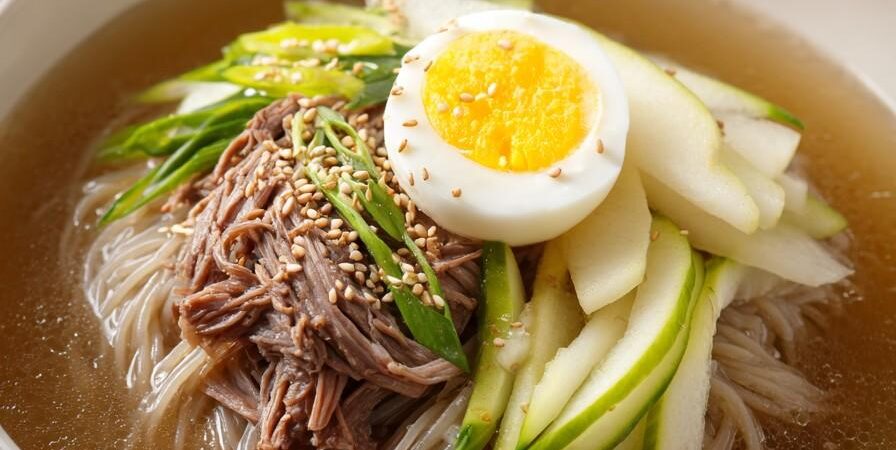
Typical toppings include:
- Cucumber
- Korean pear
- Boiled egg
- Sliced beef
- Pickled radish
- Sesame seeds
The combination of chilled noodles, fresh toppings, and flavorful seasonings creates a unique Korean dining experience.
The History of Naengmyeon
This traditional dish has a long history in Korean cuisine and originated in the northern regions of the Korean Peninsula.
It was traditionally enjoyed in colder regions, but over time it became popular throughout Korea. Today, many people especially enjoy it during summer because of its refreshing taste.
It is now considered one of Korea’s most recognizable traditional noodle dishes.
Types of Naengmyeon
There are two main styles that are widely enjoyed.
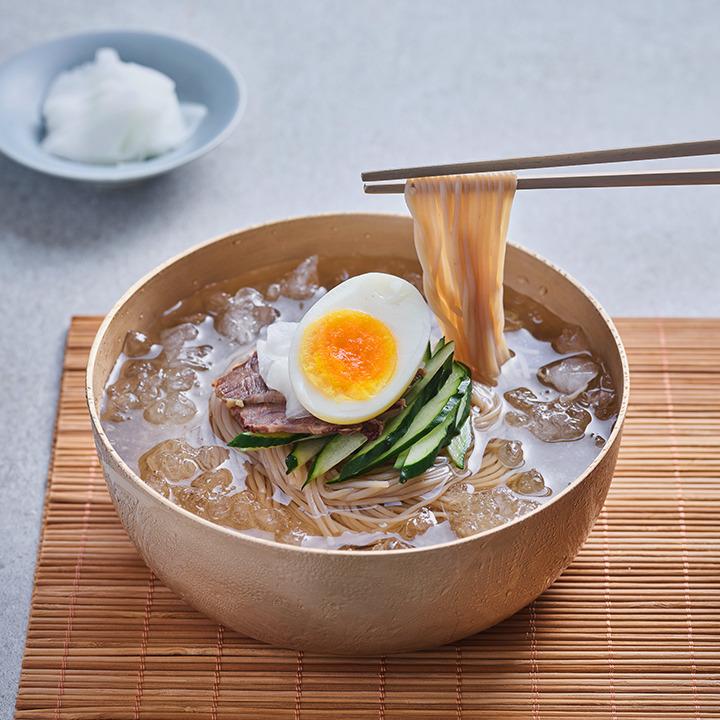
Mul Naengmyeon
Mul Naengmyeon is served in a chilled broth. The broth may be made with beef, vegetables, or dongchimi, a type of Korean radish water kimchi.
It has a mild, refreshing, and slightly tangy flavor.
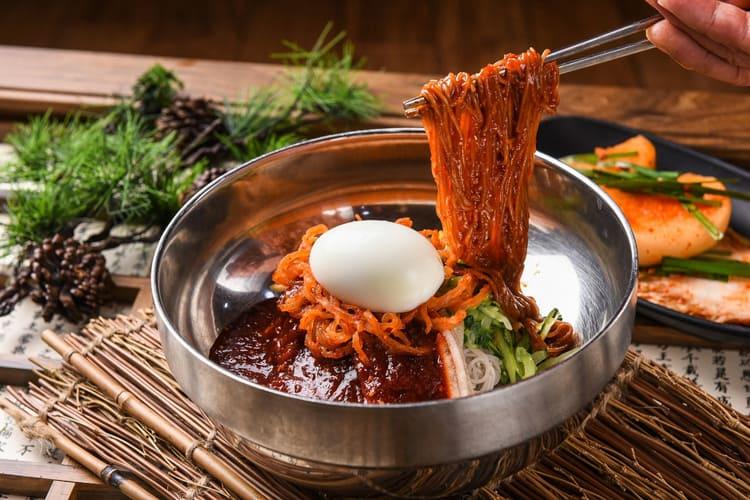
Bibim Naengmyeon
Bibim Naengmyeon is served with a spicy Korean sauce rather than a large amount of broth.
The sauce commonly includes gochujang, vinegar, and other seasonings, creating a spicy, sweet, and tangy flavor.
Both styles offer a different way to enjoy Korean cold noodles.
Ingredients
Traditional versions may include:
- Buckwheat or starch-based noodles
- Chilled broth or spicy sauce
- Cucumber
- Korean pear
- Boiled egg
- Pickled radish
- Beef slices
- Sesame seeds
- Vinegar
- Mustard
Ingredients and flavors can vary between restaurants and regions.
Why Is This Korean Dish So Popular?
This refreshing specialty is loved for its distinctive flavor and texture.
People enjoy it because it is:
- Refreshing during warm weather
- Light but satisfying
- Chewy and flavorful
- Easy to customize with seasonings
- A traditional Korean specialty
The combination of cold noodles and fresh toppings makes this meal different from many other noodle dishes.
Is It Healthy?
It can be part of a balanced meal, particularly when served with vegetables and moderate toppings.
The noodles provide carbohydrates for energy, while ingredients such as cucumber, radish, pear, and egg add different nutrients and textures.
The nutritional value can vary depending on the broth, sauce, toppings, and portion size.
How to Enjoy It
The dish is usually served very cold.
Some people add a little vinegar or mustard to adjust the flavor before eating. The noodles are then mixed well with the broth or sauce.
It is also commonly enjoyed with Korean BBQ. The refreshing noodles provide a pleasant contrast to rich grilled meats such as Galbi and Bulgogi.
Korean Food Culture
Cold noodles represent the Korean tradition of enjoying different foods according to the season.
Their cool temperature and refreshing flavors make them especially enjoyable during warm weather. Sharing a meal with family or friends is also a popular Korean dining experience.
The dish shows how Korean cuisine combines texture, temperature, and flavor to create a balanced meal.
Naengmyeon in Australia
As Korean cuisine continues to grow in popularity across Australia, more Korean restaurants are offering traditional cold noodle dishes.
You can find these dishes in Korean restaurants and food areas in cities such as Sydney, Melbourne, Brisbane, Perth, Adelaide, and Canberra.
For Australians discovering Korean cuisine, this specialty is an interesting choice because its chilled noodles and refreshing flavors offer something different from familiar hot noodle soups.
For more information about Korean food and culture, visit the official VISITKOREA website.
Frequently Asked Questions
What is Naengmyeon?
Naengmyeon is a traditional Korean cold noodle dish made with chewy noodles and served either in a chilled broth or with a spicy sauce.
Is Naengmyeon served hot or cold?
It is served cold. Mul Naengmyeon comes with chilled broth, while Bibim Naengmyeon is mixed with a spicy sauce.
What is the difference between Mul Naengmyeon and Bibim Naengmyeon?
Mul Naengmyeon is served in a cold broth and has a mild, refreshing flavor. Bibim Naengmyeon is mixed with a spicy, sweet, and tangy sauce.
Is Naengmyeon spicy?
Mul Naengmyeon is generally mild, while Bibim Naengmyeon is usually spicy because it contains a Korean chili-based sauce.
What do you eat with Naengmyeon?
It is often enjoyed with Korean BBQ dishes such as Galbi and Bulgogi. Kimchi and other Korean side dishes can also complement the meal.
Where can I find Naengmyeon in Australia?
Many Korean restaurants across Australia serve traditional cold noodle dishes, particularly in areas with established Korean food communities.
Conclusion
Naengmyeon is one of Korea’s most distinctive traditional noodle dishes. Its chewy noodles, chilled broth or spicy sauce, and fresh toppings create a refreshing and satisfying meal.
Whether you prefer the mild flavor of Mul Naengmyeon or the spicy taste of Bibim Naengmyeon, this Korean specialty is a delicious way to discover Korean food culture.
If you enjoy Korean cuisine, you may also like our articles about Bibimbap, Japchae, Kimchi, and Korean BBQ.