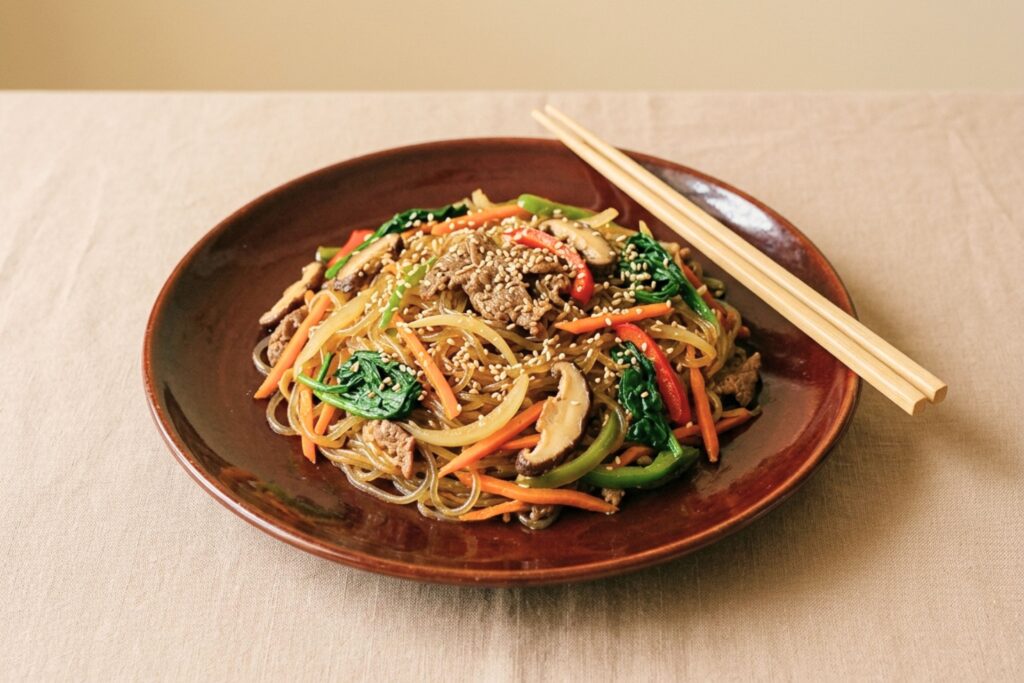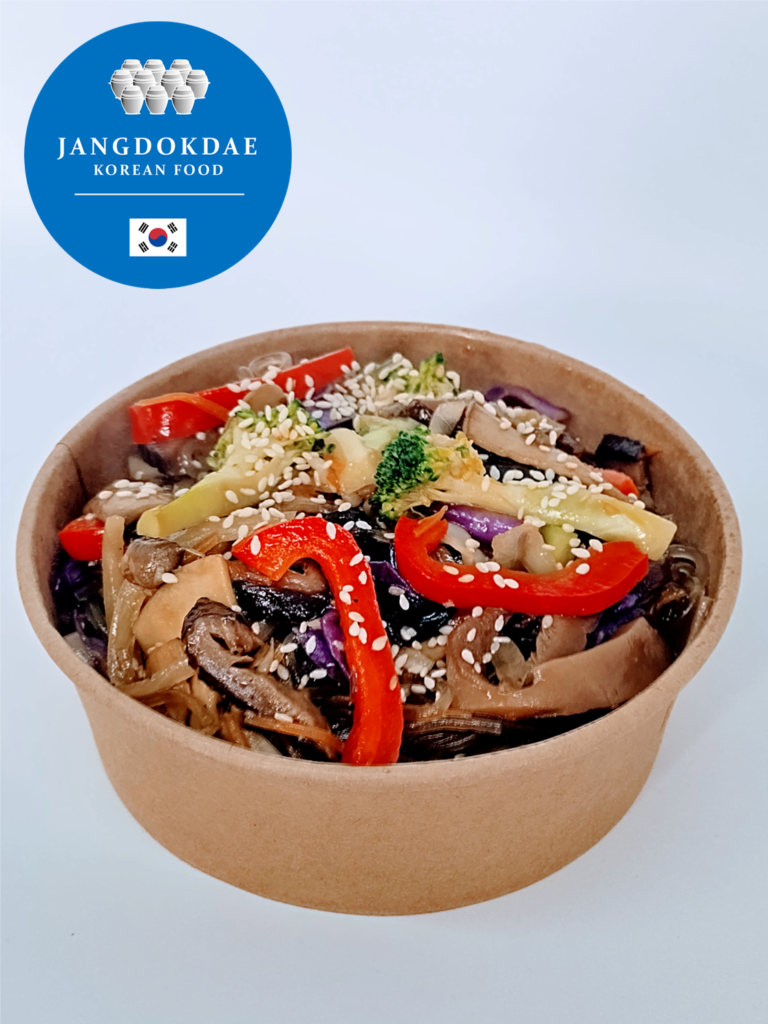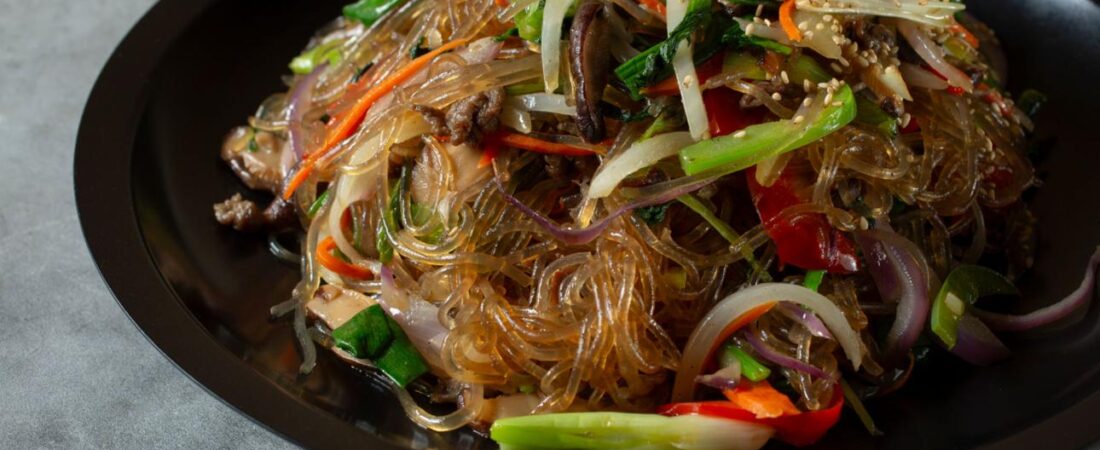
Japchae is one of Korea’s most popular noodle dishes, known for its chewy sweet potato noodles, colourful vegetables, savoury seasoning, and delicate sesame aroma.
Unlike many noodle dishes, Japchae is not usually served in a soup or spicy sauce. Instead, the ingredients are cooked and combined with a light soy-based seasoning. This creates a balanced flavour while allowing the texture and taste of each ingredient to stand out.
Japchae is enjoyed as an everyday meal, side dish, party food, and special-occasion dish. It is also one of the Korean foods that many people enjoy when trying Korean cuisine for the first time.
What Is Japchae?
Japchae is a Korean stir-fried noodle dish made with dangmyeon, translucent noodles produced from sweet potato starch.
The noodles are combined with vegetables such as spinach, carrots, onions, and mushrooms. Beef is often included, although vegetarian and vegan versions are also easy to prepare.
Typical ingredients include:
- Sweet potato glass noodles (dangmyeon)
- Beef, tofu, or mushrooms
- Spinach
- Carrots
- Onion
- Mushrooms
- Capsicum
- Garlic
- Soy sauce
- Sesame oil
- Sesame seeds
- A small amount of sugar
The result is a soft and chewy noodle dish with a savoury, slightly sweet flavour.
What Do Japchae Noodles Taste Like?
One of the most distinctive features of this dish is the texture of the noodles.
Dangmyeon noodles are chewy and slightly springy rather than soft like ordinary wheat noodles. They have a fairly mild flavour, which allows them to absorb the soy sauce, sesame oil, garlic, and other seasonings.
Japchae is generally:
- Mild rather than spicy
- Slightly sweet
- Savoury
- Nutty from sesame oil
- Chewy and satisfying
This makes it a good choice for people who are unfamiliar with Korean food or prefer dishes without strong chilli heat.
The History of Japchae
Japchae has a long history dating back to Korea’s Joseon Dynasty.
Interestingly, the original version was quite different from the dish commonly eaten today. Early Japchae was primarily a mixture of vegetables and other ingredients and did not contain the sweet potato glass noodles that are now considered its defining feature.
Dangmyeon became an important part of the dish later, transforming Japchae into the chewy noodle dish familiar today.
Over time, Japchae became associated with Korean celebrations, family gatherings, and special meals.
For more information about Korean food and cultural traditions, the Korean Cultural Centre Australia provides information about Korean culture and activities in Australia.
What Are Dangmyeon Noodles?
Dangmyeon are Korean glass noodles made primarily from sweet potato starch.
When cooked, they become translucent with a distinctive chewy texture. They are different from rice noodles and wheat noodles, making them an important part of Japchae’s character.
Dangmyeon can also be used in other Korean dishes, including dumplings, soups, and hot pots.
For someone trying Korean cuisine for the first time, the texture of dangmyeon is one of the most interesting features of this noodle dish.
Why Is Japchae So Popular?
Japchae combines several qualities that make it easy to enjoy.
The noodles are chewy, the vegetables add freshness and colour, and the seasoning provides a mild savoury-sweet flavour.
It is also versatile because it can be served:
- As a main meal
- As a Korean side dish
- At family gatherings
- At parties
- During holidays
- At Korean BBQ meals
- In lunch boxes
It can be served warm, at room temperature, or chilled, depending on the occasion.
Is Japchae Spicy?
Traditional Japchae is not a spicy Korean dish.
Unlike Tteokbokki or dishes made with gochujang, Japchae normally relies on soy sauce, sesame oil, garlic, and a little sweetness for its main flavour.
This makes it particularly suitable for:
- Children
- People who do not enjoy spicy food
- First-time Korean food visitors
- People who prefer mild flavours
Some modern recipes may add chilli or spicy ingredients, but this is not necessary for a traditional-style dish.
Is Japchae Vegetarian?
Yes. Japchae can easily be prepared without meat.
A vegetarian version can use:
- Mushrooms
- Tofu
- Spinach
- Carrots
- Onion
- Capsicum
- Other seasonal vegetables
For a vegan version, the seasoning should also be checked because some recipes use fish sauce or other animal-based ingredients.
This flexibility makes Japchae suitable for different dietary preferences.
Japchae and Korean Celebrations
Japchae is strongly associated with sharing food during special occasions.
It is commonly prepared for Korean holidays such as Seollal (Lunar New Year) and Chuseok, as well as birthdays, weddings, parties, and family gatherings.
Because it can be prepared in a large quantity and served to many people, Japchae is particularly suitable for sharing.
For many Korean families, a large plate of Japchae on the table is connected with celebration and hospitality.
How Is Japchae Served?
Japchae is usually served on a large plate or bowl with the colourful ingredients mixed together.
It can be enjoyed on its own or alongside other Korean dishes.
Popular combinations include:
- Steamed rice
- Kimchi
- Korean BBQ
- Bulgogi
- Mandu
- Banchan
- Korean soups
The mild flavour also makes it a useful balance when served alongside stronger or spicier Korean dishes.
Tips for Making Better Japchae
Good Japchae depends heavily on texture.
For a better result:
- Cook the dangmyeon until tender but not overly soft.
- Avoid overcooking the vegetables so they retain some texture.
- Cook ingredients separately when possible.
- Use sesame oil carefully so it adds aroma without overpowering the dish.
- Mix the ingredients thoroughly while the noodles are still warm.
- Taste the seasoning before serving.
Freshly prepared Japchae should have chewy noodles, colourful vegetables, and a balanced savoury-sweet flavour.
Japchae in Australia
Japchae has become increasingly familiar to Australian diners as Korean cuisine continues to grow in popularity.
It can often be found on Korean restaurant menus alongside popular dishes such as Korean BBQ, Bibimbap, Bulgogi, Mandu, and Kimchi Jjigae.
For Australians who are new to Korean food, Japchae can be an approachable starting point because it is generally mild and does not rely on chilli for its flavour.
It is also a practical dish for sharing with friends and family because one large serving can be enjoyed alongside several other Korean dishes.
How to Order Japchae at a Korean Restaurant
If you are visiting a Korean restaurant for the first time, Japchae is often a simple dish to try.
You can ask whether the restaurant’s version contains beef, seafood, or other ingredients if you have dietary preferences.
For a shared meal, a combination such as:
Japchae + Korean BBQ + Kimchi + Banchan
can offer a good introduction to different Korean flavours and textures.
The mild noodles can balance the stronger flavours of grilled meat and fermented side dishes.
Japchae Compared With Other Korean Noodle Dishes
Korean cuisine includes many different noodle dishes, and Japchae has a distinctive place among them.
Japchae is chewy, savoury-sweet, and stir-fried.
Kalguksu uses handmade knife-cut noodles and is usually served in a warm broth.
Naengmyeon consists of cold noodles served with chilled broth or spicy seasoning.
Jajangmyeon features noodles covered in a rich black bean sauce.
These differences make Korean noodle cuisine particularly diverse.
Why Japchae Is a Great Introduction to Korean Food
For someone unfamiliar with Korean cuisine, some dishes may initially seem very spicy, strongly fermented, or unfamiliar.
Japchae can be an easier introduction because its flavour is relatively gentle.
The familiar idea of noodles is combined with ingredients such as carrots, spinach, onions, mushrooms, and beef.
At the same time, the chewy dangmyeon noodles and sesame aroma provide an authentic Korean food experience.
Frequently Asked Questions About Japchae
What is Japchae made of?
Japchae is made with sweet potato glass noodles, vegetables, soy sauce, sesame oil, garlic, and other seasonings. Beef, tofu, or mushrooms may also be included.
Is Japchae spicy?
Traditional Japchae is generally not spicy. Its main flavours come from soy sauce, sesame oil, garlic, and a small amount of sweetness.
What are dangmyeon noodles?
Dangmyeon are Korean glass noodles made primarily from sweet potato starch. They become translucent and chewy when cooked.
Is Japchae vegetarian?
Yes. Meat can be replaced with tofu and additional vegetables or mushrooms. Check the seasonings if you require a vegetarian or vegan version.
Can Japchae be eaten cold?
Yes. Japchae can be enjoyed warm or at room temperature, and some people also enjoy it chilled.
When do Koreans eat Japchae?
Japchae is eaten throughout the year and is especially common at holidays, birthdays, weddings, parties, and family gatherings.
Is Japchae suitable for children?
Traditional Japchae is usually mild rather than spicy, making it a popular choice for children and people who prefer gentle flavours.
Final Thoughts
Japchae is much more than a simple noodle dish. Its chewy sweet potato noodles, colourful vegetables, sesame aroma, and mild savoury-sweet seasoning make it a distinctive part of Korean cuisine.
Its connection with celebrations and family gatherings also gives Japchae an important place in Korean food culture.
For Australians discovering Korean food, Japchae is an excellent dish to try, especially if you enjoy noodles but prefer flavours that are not very spicy.
Whether enjoyed at a Korean restaurant, shared at a family gathering, or prepared at home, Japchae offers a delicious introduction to the variety and tradition of Korean cuisine.
If you enjoy Japchae, you may also like our guides to Mandu, Naengmyeon, Kalguksu, and Korean BBQ.