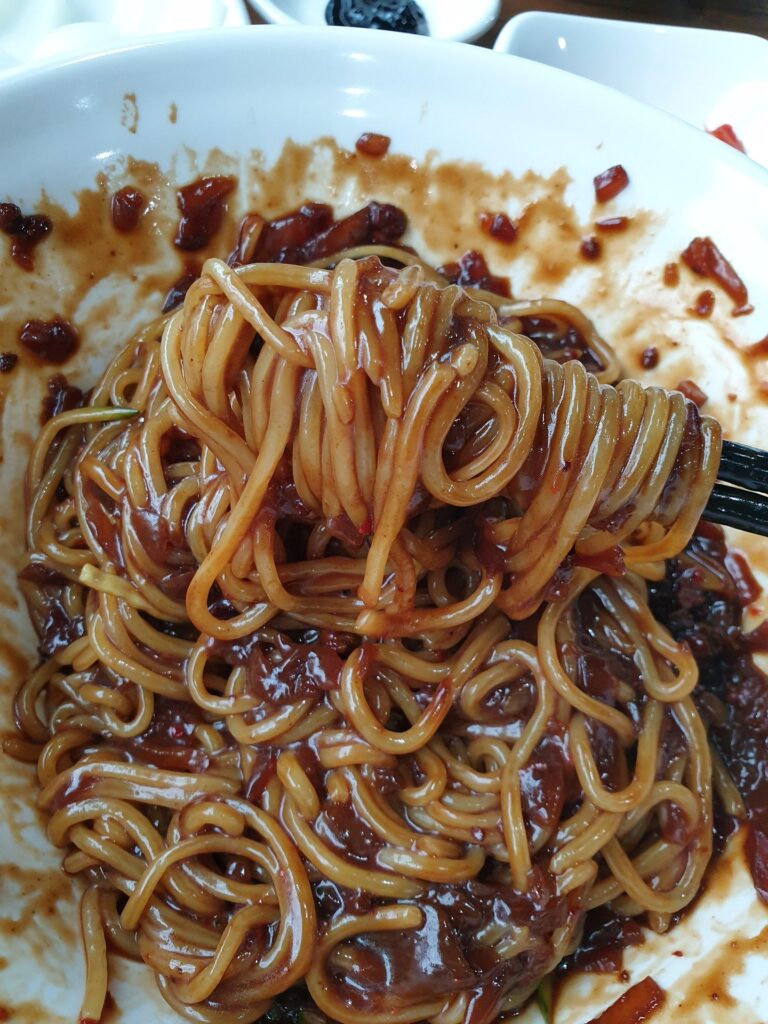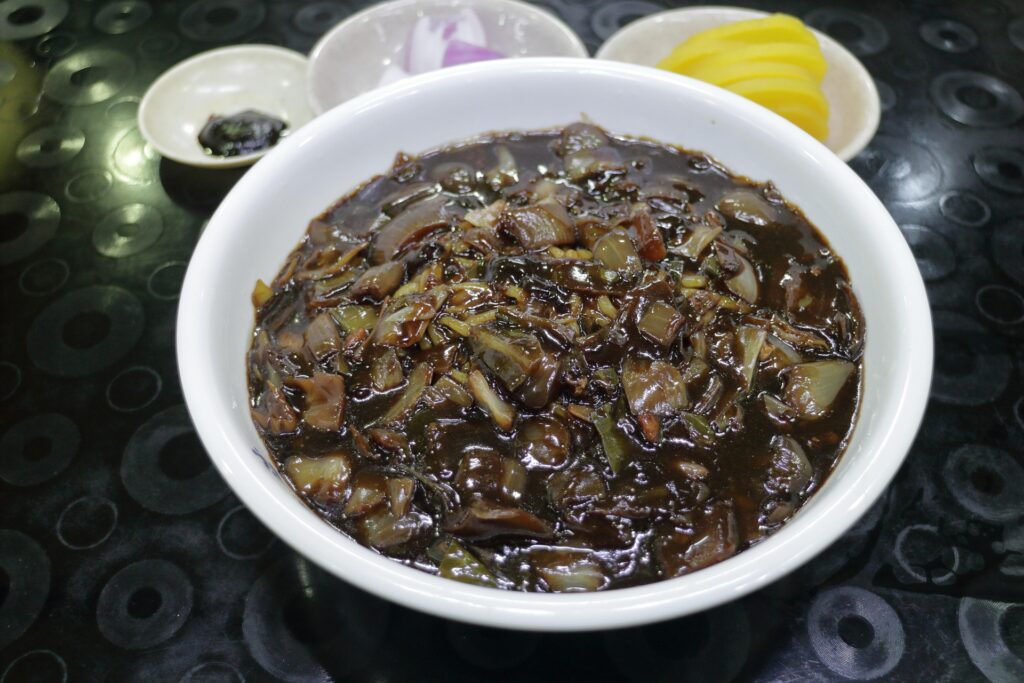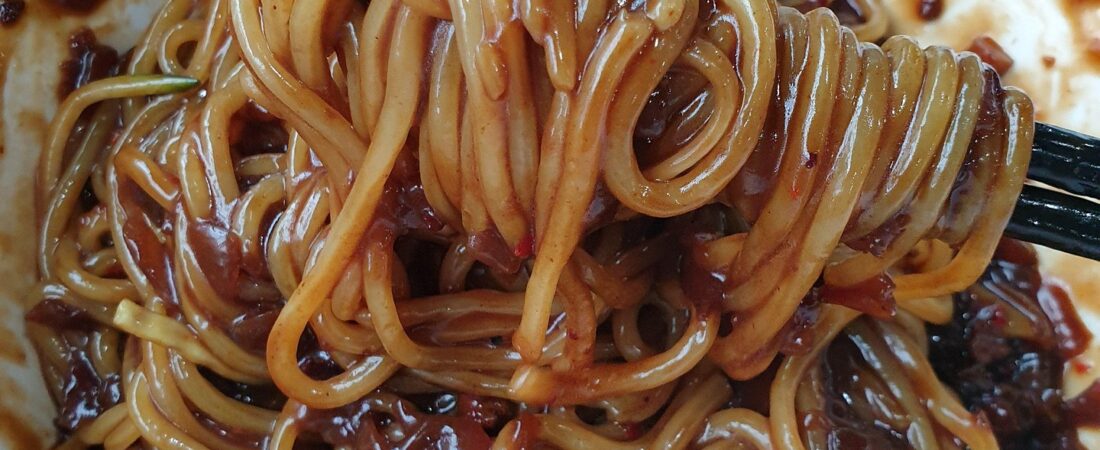
Jajangmyeon (짜장면) is one of Korea’s most beloved noodle dishes. Made with thick wheat noodles and a rich black bean sauce, this comforting meal is known for its savoury flavour, soft vegetables, and satisfying texture.
Although the dish has roots in Chinese cuisine, it developed its own identity in Korea and became an important part of modern Korean food culture.
Today, this popular noodle dish is enjoyed in homes, restaurants, and takeaway shops across Korea. It is also becoming increasingly popular in Australia as more people discover Korean cuisine.
What Is Jajangmyeon?
Jajangmyeon is a Korean noodle dish served with a thick sauce made from chunjang, a Korean fermented black bean paste.
For more information about Jajangmyeon and its history in Korean food culture, visit the official VISITKOREA guide to Jjajangmyeon.
The sauce is usually cooked with diced pork, onions, zucchini, cabbage, and other vegetables. A small amount of sugar may be added to balance the rich savoury flavour.
Typical ingredients include:
- Thick wheat noodles
- Chunjang (Korean black bean paste)
- Pork
- Onion
- Zucchini
- Cabbage
- Potato
- Garlic
- Cooking oil
- Sugar
- Cornstarch
- Cucumber for garnish
The finished dish has a deep brown-black colour and a rich sauce that coats the noodles.
The History of This Korean Noodle Dish
The story of this food is closely connected with the history of Chinese communities in Korea.
The dish was influenced by Zhajiangmian, a Chinese noodle dish traditionally served with fermented soybean paste. Chinese immigrants introduced related noodle dishes to Korea, particularly around the port city of Incheon.
Korean cooks gradually changed the ingredients and seasoning to suit local tastes. Chunjang became an important part of the Korean version, creating the darker colour and sweeter, richer flavour familiar today.
Over time, the dish became a distinctly Korean favourite rather than simply a Chinese-style noodle meal.
For further information about Korean food and cultural experiences in Australia, you can visit the official Korean Cultural Centre Australia website: https://australia.korean-culture.org/
Why Is It So Popular in Korea?
There are several reasons this comfort food has remained popular for generations.
It is:
- Rich and savoury
- Filling and satisfying
- Relatively affordable
- Suitable for lunch or dinner
- Popular with both children and adults
- Easy to order as takeaway
It is also strongly associated with Korean home delivery culture.
For many people in Korea, ordering a bowl of black bean noodles is a familiar and comforting experience, especially when sharing a meal with family.
Popular Varieties
There are several styles to discover.
Classic Version
The traditional style combines thick noodles with a rich sauce containing pork and vegetables.
Gan Jajang
Gan Jajang is served with a thicker, more concentrated sauce. Unlike the standard version, the sauce and noodles may be served separately, allowing diners to mix them together.
Seafood Version
Seafood varieties can include squid, prawns, mussels, or other ingredients. The seafood adds a deeper savoury flavour.
Spicy Version
Some restaurants add chilli to create a hotter variation for people who enjoy spicy Korean food.
Samseon Jajang
Samseon Jajang is a more luxurious seafood-based version that can contain several types of seafood.
What Does It Taste Like?
The flavour is very different from sweet or spicy Korean dishes such as Tteokbokki.
The black bean sauce is generally:
- Savoury
- Slightly sweet
- Rich
- Mildly salty
- Deep in umami flavour
The thick noodles provide a chewy texture, while the cooked vegetables add softness and freshness.
For people who are new to Korean cuisine, this can be an approachable dish because it is generally not spicy.
How to Eat It
Before eating, mix the noodles thoroughly with the sauce so that every strand is evenly coated.
It is commonly served with danmuji, the bright yellow Korean pickled radish. The crisp and slightly sweet radish provides a refreshing contrast to the rich sauce.
Raw sliced onion may also be served with a small amount of black bean paste for dipping.
Some people enjoy ordering other Korean-Chinese dishes at the same time, especially tangsuyuk, a sweet-and-sour pork dish.
Jajangmyeon and Black Day
One of the most interesting cultural traditions connected with this food is Black Day, held on April 14 in South Korea.
Black Day is an informal day associated with single people. According to popular culture, people who did not receive gifts on Valentine’s Day or White Day may gather with friends and eat black-coloured foods such as this noodle dish.
It is a lighthearted modern tradition rather than an official national holiday, but it has become well known in Korean popular culture.
Is It Healthy?
Like many complete meals, its nutritional value depends on the ingredients, portion size, and preparation method.
The noodles provide carbohydrates, while pork contributes protein. Vegetables such as onions, cabbage, zucchini, and potatoes provide additional nutrients and fibre.
However, the sauce can contain significant amounts of salt, sugar, and oil.
For a more balanced meal, consider enjoying a moderate portion with additional vegetables or a side salad.
Jajangmyeon in Australia
Korean cuisine has grown considerably in popularity across Australia, and Korean-style black bean noodles are now available at many Korean restaurants and Korean-Chinese restaurants.
For Australians discovering Korean food for the first time, this dish can be an easy introduction because it is filling, savoury, and usually not spicy.
It can also be enjoyed as part of a larger Korean meal alongside dishes such as:
- Tangsuyuk
- Mandu
- Kimchi
- Korean dumplings
- Korean fried chicken
As interest in Korean food continues to grow, more Australians are becoming familiar with traditional dishes as well as modern Korean cuisine.
Tips for Enjoying It at Home
If you are preparing this dish at home, a few simple tips can improve the result.
- Use thick fresh wheat noodles when possible.
- Cook the vegetables until tender but not mushy.
- Fry the chunjang before adding it to the sauce.
- Balance the sauce with a small amount of sweetness.
- Mix the noodles and sauce just before serving.
- Add sliced cucumber or spring onion for freshness.
Freshly cooked noodles generally provide the best texture.
Frequently Asked Questions
What is Jajangmyeon made from?
It is usually made with thick wheat noodles, Korean black bean paste, pork, onions, and various vegetables.
Is Jajangmyeon spicy?
Traditional versions are generally mild. Some restaurants offer spicy versions with chilli added to the sauce.
What is chunjang?
Chunjang is a Korean fermented black bean paste used to create the distinctive dark sauce and savoury flavour.
What is Gan Jajang?
Gan Jajang is a style in which the thicker black bean sauce is commonly served separately from the noodles before mixing.
What is Black Day in Korea?
Black Day is an informal Korean tradition celebrated on April 14. It is associated with single people gathering together and eating black-coloured foods, especially black bean noodles.
Can I find Jajangmyeon in Australia?
Yes. It is available at many Korean and Korean-Chinese restaurants in Australian cities and areas with established Korean communities.
Final Thoughts
Jajangmyeon is more than a simple bowl of noodles. Its history shows how different culinary traditions can come together and develop into something uniquely Korean.
The combination of chewy wheat noodles, rich black bean sauce, tender vegetables, and savoury toppings makes it a comforting meal enjoyed by generations.
Whether you are visiting Korea, exploring Korean restaurants in Australia, or trying Korean food at home, this classic noodle dish is well worth discovering.
If you enjoy exploring Korean cuisine, you may also like our guides to Kalguksu, Japchae, Mandu, and Korean Fried Chicken.